Why I'm Quoting Longer Lead Times (And Why You Should Ask About This)
Steel prices in Utah are up, and some materials are hard to find right now. Here's what's happening and what it means for your project.
Read moreby Mark Gillman, Fabrication Specialist
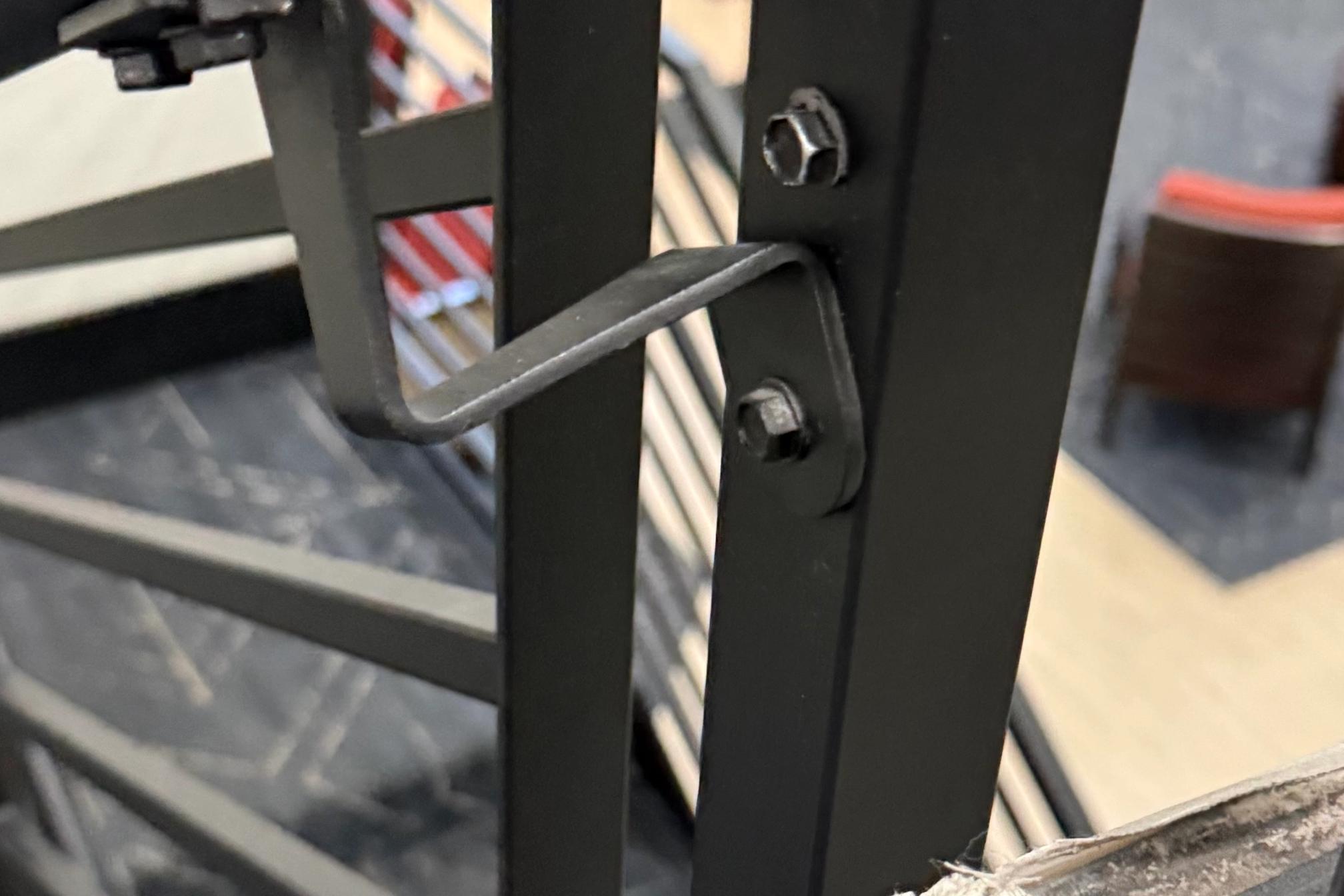
My family and I stayed at a hotel over Christmas while visiting relatives. Nice enough place, clean rooms, decent breakfast. But walking up the stairs to our room, I grabbed the handrail and immediately thought, "This is exactly what I refuse to build."
The rail felt wrong in my hand. Too light, too thin, like if you actually needed to catch yourself, you'd bend it. I'm a fabricator, so I notice these things, but halfway up the stairs my wife pointed it out too: "Does this feel flimsy to you?"
That's when I started really looking at it.
The two sections of railing met at a landing. They hadn't bothered to join them properly—just butted together with a visible gap and bare metal showing where paint should be. No weld, no proper connection, just hoping nobody notices.
Further up, I found more bare spots where the paint had chipped off or was never applied in the first place. Some welds were missing entirely—brackets attached with screws alone, no structural welding. In a couple places, there were extra screws driven into the wall above the brackets, attaching nothing, serving no purpose. Someone either made a mistake and didn't fix it, or didn't care.
Almost every bracket was bent. Not catastrophically, but visibly warped, like they'd been forced into place on a staircase that wasn't quite the right dimensions and nobody wanted to remake them to fit properly.
This wasn't a handrail that had been beaten up over years of use. This was shoddy work from day one.
I take photos of bad work when I see it. Not to mock other contractors, but because it reminds me why I do things the way I do. That hotel handrail is a perfect example of what happens when every decision prioritizes cheap and fast over right.
Somebody bid that job knowing they'd use the thinnest gauge material that would technically pass code. They knew they wouldn't prep the metal properly before painting. They knew the brackets would need to be forced into place rather than fabricated to fit. They knew all of this, bid it cheap, won the contract, and delivered exactly what they promised: the minimum.
And you know what? It's legal. It meets code. It won't fall down. It's just terrible.
That handrail will probably last twenty years. It'll get bent more, the paint will keep chipping, someone will eventually patch it with touch-up paint that doesn't quite match. It'll look progressively worse, but it'll function.
So why shouldn't every handrail be built that way?
Because I have to live with my work. When I build a handrail, my name is on it. When your neighbor asks who did your railing, you're going to say "Mark" or you're going to say "some guy I found on KSL." I want to be "Mark," not "some guy."
That hotel doesn't care. They hired the cheapest bid, got the cheapest work, and their guests will use that flimsy handrail for years without knowing who built it. No reputation on the line. No referrals at stake. Just a line item on a construction budget.
That's not my business model.
When I say my railings cost more because they're built with better material and better craftsmanship, here's specifically what that means:
Material gauge: I use steel thick enough that you can't flex it with your hand. Not the minimum that meets code, but what actually feels solid when you grip it. You can tell the difference immediately.
Proper welding: Every connection is welded, not just screwed together. The welds are ground smooth so you don't catch your hand on rough spots. Joints are actually joined, not just butted together and hoped for the best.
Finish quality: Metal is properly prepped before painting or powder coating. Welds are finished. Everything that's supposed to be covered with finish is covered. You won't find bare metal at the joints or chipped paint within the first year.
Fabrication precision: Brackets are made to fit the actual staircase dimensions. If they don't fit, I remake them. I don't bend them into place and leave them warped. There are no "extra screws" because I didn't make mistakes that needed covering up.
Structural integrity: The handrail is designed to actually support someone who falls. Not just meet the code minimum, but function as the safety feature it's supposed to be.
All of this costs more. The material costs more. The time costs more. The labor costs more. But the result is something I'm willing to put my name on.
I've heard people say "you get what you pay for" so many times it sounds like a cliché. But standing on that hotel staircase, feeling that cheap handrail flex under my hand, seeing the bare metal at the joints and the bent brackets and the missing paint, it hit me how literally true that is.
Someone paid for the cheapest possible handrail. And they got exactly that. Minimum material, minimum effort, minimum quality. It meets the letter of the building code while missing the entire spirit of why handrails exist.
My customers pay more, and they get railings that feel solid, look finished, and will still look good in twenty years. Not because I'm overcharging, but because quality actually costs more to produce.
I could build railings the way that hotel's contractor did. Use thinner material, skip the finish work, force brackets into place instead of making them fit right, leave the welds rough, butt joints together without properly connecting them. I'd be cheaper. I'd win more bids. I'd probably make more money in the short term.
But I'd hate the work. I'd be embarrassed when people asked who built it. I wouldn't be able to point to my projects with pride. And eventually, my reputation would reflect the quality of my work—which is to say, it wouldn't be good.
Thirty years into this career, I've figured out that I'd rather lose jobs to cheaper bids than build work I'm not proud of. Some people think that's leaving money on the table. I think it's the only way to build a business that lasts.
If you're getting quotes for a handrail and I'm more expensive than another bid, this is why. I'm not padding my price or overcharging. I'm building something that won't feel flimsy when you grab it, won't have bare metal showing at the joints, won't have bent brackets because I was too lazy to remake them properly.
You can absolutely find someone cheaper. They'll build you a handrail that meets code and technically functions. And in ten years, you'll notice all the little shortcuts they took. The thin material. The rough welds. The places where the finish is missing. The brackets that were forced into place.
Or you can pay for quality work from someone who won't put their name on anything less. Your choice.
But if you're the kind of person who notices when a handrail feels cheap, who sees the details that separate good work from good-enough work, then you already know which option makes sense.
That hotel handrail reminded me why I do what I do the way I do it. It's a perfect example of work that technically meets requirements while completely missing the point.
I build railings that feel solid because they are solid. That look finished because they are finished. That will age well because they were built right from the start. That costs more money upfront, but it's the difference between "some guy who did our railing" and "Mark built this and we love it."
You really do get what you pay for. And I'd rather build something worth paying for than something someone chose because it was cheap.
That's not going to change, even if it means losing jobs to contractors who build like that hotel's handrail. I have to live with my work. I want to be proud of it.
So do my customers, which is why they pay for quality instead of settling for minimum.
Steel prices in Utah are up, and some materials are hard to find right now. Here's what's happening and what it means for your project.
Read moreMost people don't think about shower grab bars until someone slips. Here's a no-drill solution I've been testing in three Utah County homes—and why I think it might change how we handle bathroom safety.
Read more