I lost a job last month. Nice couple, wanted a deck railing. I quoted them for quality materials—the stuff I actually trust. They got another quote for half the price, went with the other guy.
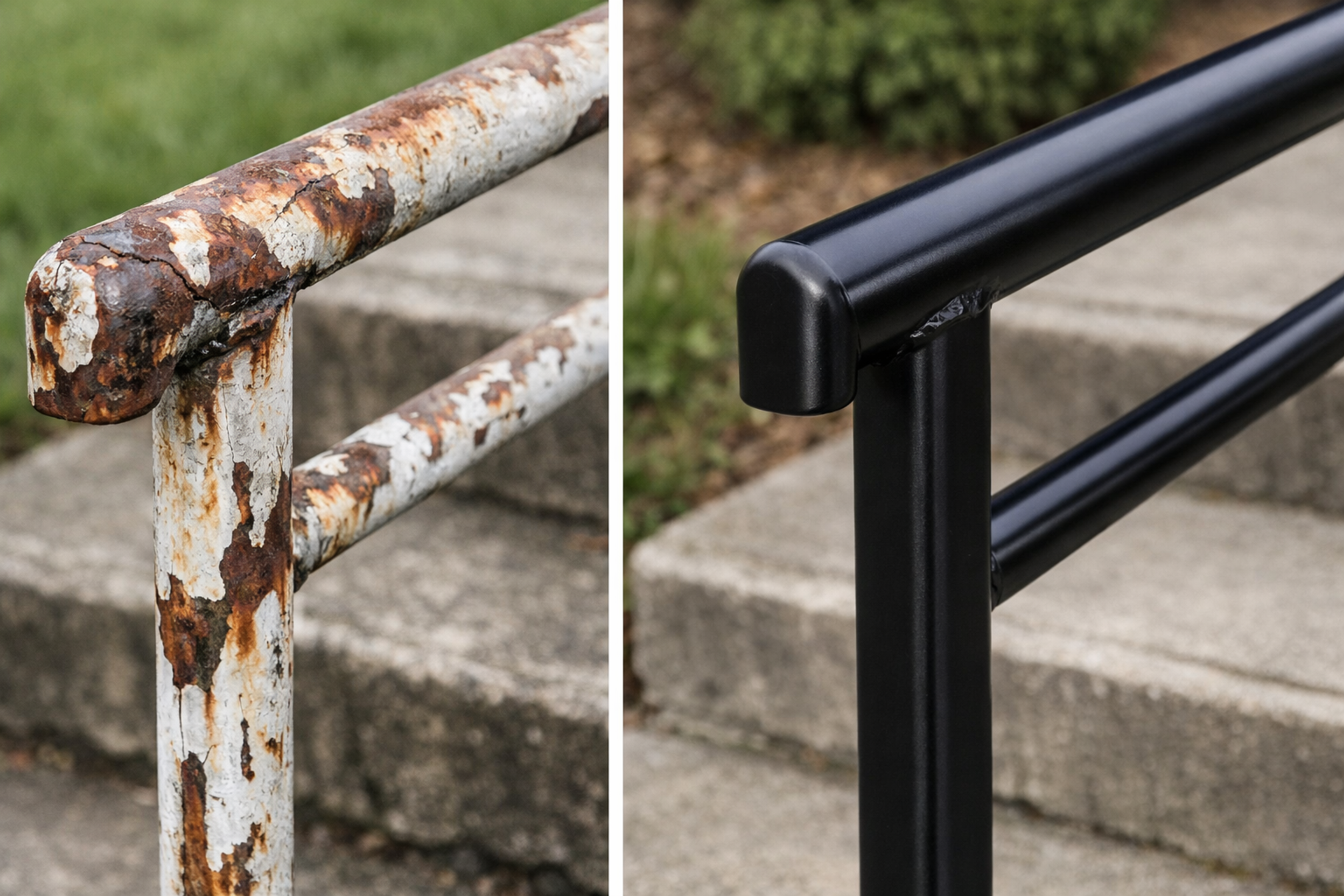
Three weeks ago, they called me back. The railing's already coming loose. The welds are cracking. It looks cheap because it is cheap.
Now they want me to fix it, which means tearing out the cheap work and starting over. They're going to pay twice—once for the work that failed, and once for the work that'll last.
I could've told them this would happen. Actually, I did tell them. But "it'll last" is hard to see when you're comparing numbers on paper.
The Home Depot Problem
Here's what happens: someone goes to Home Depot, sees a handrail kit for $200, then calls me and I quote $800 for a custom rail. They think I'm ripping them off.
But here's what they don't see:
That $200 kit is made from the thinnest gauge steel that'll technically hold weight. The brackets are pot metal that'll strip out if you torque them too hard. The finish is powder coating over steel that wasn't properly prepped, so it'll start flaking off in two years. The mounting hardware is barely adequate for a perfect installation, which means if your posts aren't exactly standard spacing, you're improvising with weaker connections.
My $800 rail is built from proper gauge steel that I select specifically for the span and load. I weld the connections, not bolt them. I prep and prime everything properly before finish coating. I custom-fit it to your actual structure, not force your structure to fit a standard size.
One of these will outlast your house. The other will need replacing before you finish paying off your mortgage.
"But It's All Steel, Right?"
Not even close.
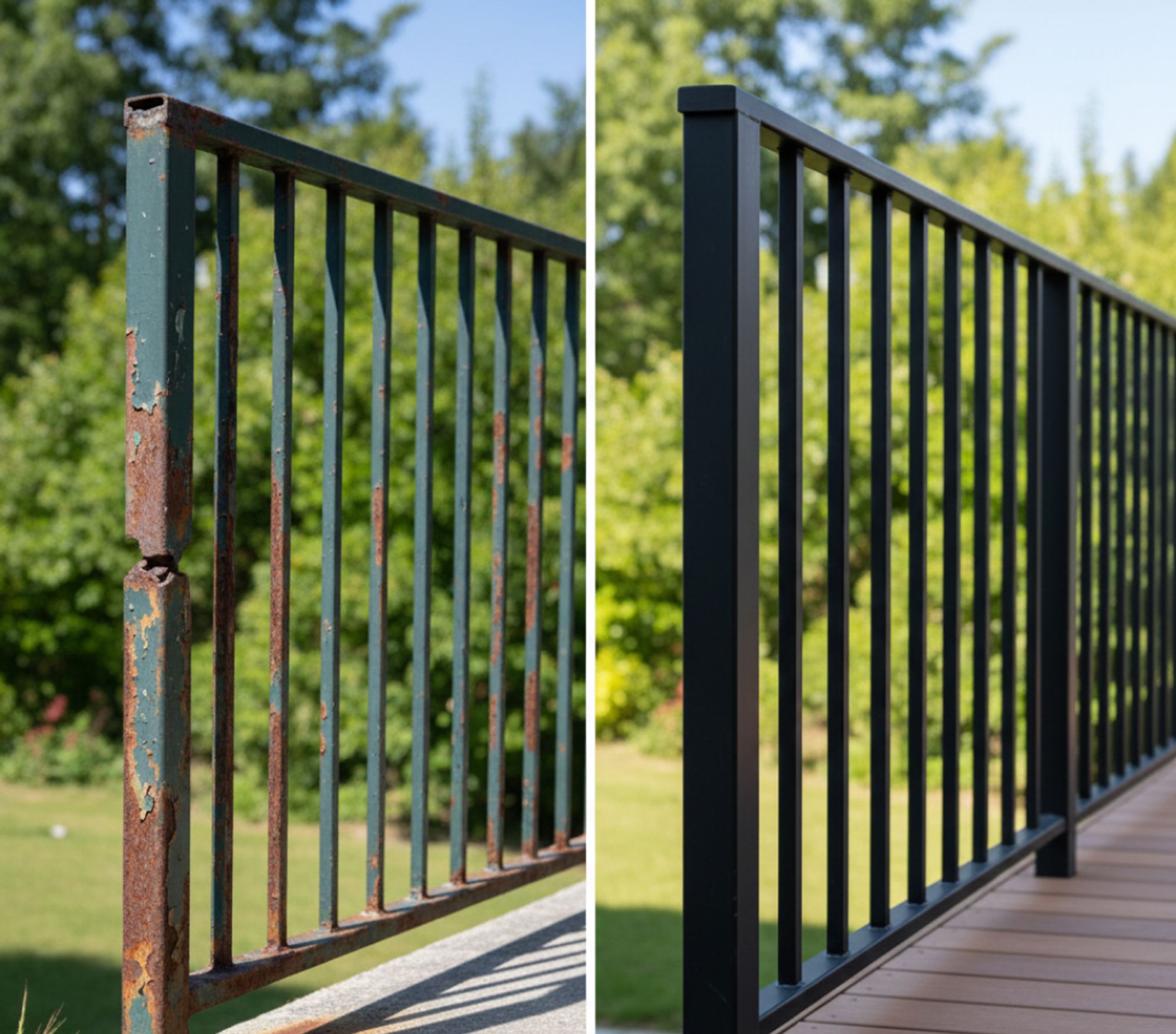
Steel comes in grades, thicknesses, and quality levels that most people never think about. The handrail that feels solid in the store feels that way because it's short and supported on both ends. Install that same rail over a twelve-foot span with nothing but end posts, and watch it flex like a diving board.
I use materials rated for the actual loads they'll see, plus margin. Because I've seen what happens when someone leans hard on an undersized rail, and I'm not having that conversation with someone's insurance company.
The welds matter too. A good weld is stronger than the metal it joins. A bad weld looks fine until it fails, usually when someone actually needs that railing to hold them.
I learned to weld properly. I've been doing it for thirty years. The guy who installed that $200 kit probably watched a YouTube video and bought a cheap welder at Harbor Freight.
The Math Nobody Wants to Do
Let's say you save $600 by going cheap on that railing. Feels good, right?
Five years later, it's rusting, flexing, and making your deck look shabby. You call someone to replace it. Now you're paying for:
- Removal of the old rail (which I wouldn't charge for if I'd done it right the first time)
- New materials (prices went up)
- Installation (labor costs went up too)
- The hassle of finding someone, getting quotes, scheduling, being without a railing again
You "saved" $600 and spent $1,200 extra over five years. Plus you lived with an inferior product that whole time.
Or you could pay for quality once and forget about it for the next twenty years.
What "Quality" Actually Means
When I say I use quality materials, here's what that means in practice:
For steel fabrication:
- Proper gauge steel for the application (not "whatever's cheapest")
- Steel that's been properly stored (not surface-rusted before I even start)
- Quality welding wire and proper technique
- Real prep work before finishing (not just spray and pray)
For hardware:
- Stainless or hot-dipped galvanized bolts (not zinc-plated junk that rusts through)
- Proper anchors for the substrate (not universal "should work" hardware)
- Backing plates where needed (not hoping the surface material holds)
For finishes:
- Quality primers that actually bond
- Finish coats rated for outdoor use
- Proper cure times between coats
- Touch-up of any damage before final installation
None of this is exotic or expensive stuff. It's just doing it right instead of doing it cheap.
When I Actually Recommend Cheaper Options
I'm not saying everything needs to be top-of-the-line. Sometimes the cheaper option is fine.
If you're fixing up a rental property that you're selling next year, I'll tell you where you can save money without compromising safety. If you need a temporary solution while you save up for the permanent fix, I can build something serviceable that won't break the bank.
But I'm always clear about what you're getting. "This is the budget option, here's how long it'll last, here's what the trade-offs are."
What I won't do is pretend that cheap materials are just as good as quality materials. They're not. And I won't put my name on work that I know won't hold up.
Why I'm Picky About My Suppliers
I don't buy materials from whoever's cheapest that day. I have suppliers I've worked with for years because I know what they stock is actually what they say it is.
Sounds paranoid, right? But I've seen "stainless steel" hardware that rusted in six months. I've seen "pressure-treated" lumber that rotted in two years. I've seen "commercial grade" products that failed on residential applications.
When I buy from my suppliers, I know what I'm getting. They know I'll call them out if something's wrong, and they know I send them steady business if they're straight with me.
That relationship is worth more than saving ten bucks on an order.
The Reputation Factor
Here's the thing that really matters: my name goes on every job I do.
When your railing fails in three years, you're not going to remember what you paid. You're going to remember who built it. And you're going to tell your neighbors.
I've been doing this for thirty years in the same area. My reputation is worth more than any single job. If using quality materials costs me a few jobs to people chasing the lowest price, that's fine. Those aren't my customers anyway.
My customers are the ones who appreciate that the gate I installed fifteen years ago still works perfectly. The ones whose neighbors ask "who did your railings?" because they look that good. The ones who call me first because they know I'll do it right.
That only works if I actually do it right. Every time.
What This Means for You
If you call me for a quote and it seems high, understand what you're paying for:
You're paying for materials that will actually last. You're paying for someone who knows the difference between "meets code" and "built right." You're paying for thirty years of experience that knows which shortcuts are fine and which ones will come back to haunt you.
You're also paying for someone who'll tell you honestly when you don't need the expensive option. I'm not trying to upsell you. I'm trying to build something that'll still be solid when you sell the house.
But I'm not going to compromise on quality to win a bid. I've seen too many jobs fail, too many people pay twice, too many reputations ruined by trying to compete on price instead of value.
The Bottom Line
Good materials cost more than cheap materials. That's just reality.
Good work costs more than cheap work. Also reality.
But good work with good materials, done by someone who knows what they're doing? That costs less than doing it twice.
I'd rather lose the job to someone's low bid than put my name on work I know won't last. I sleep better that way. And when that low bid fails and they call me back, at least I can fix it right without having to explain why I cut corners.
If you want cheap, I'm not your guy. There's no shortage of people who'll sell you cheap work with cheap materials and make it sound like a good deal.
But if you want it done right, with materials that'll outlast both of us, and work that I'll stand behind twenty years from now?
Then we should talk.
Because that's the only kind of work I do.